
ADVANCED TEXT
There are likely to be severe consequences both politically and nationally.
INTRODUCTION: The recent match between England and Argentina in the FIFA World Cup was marked by a controversial tactical decision by the English manager. After England scored an early goal, instead of pushing forward to secure the victory, the manager chose to adopt a defensive approach. This shift to a more cautious formation was widely seen as a mistake, as it allowed Argentina to dominate possession and mount sustained attacks. Many experts argue that this conservative strategy limited England’s chances of winning and reflected a lack of confidence at a critical moment in the game.
Give me your comments:
Discuss:
PARAGRAPH ONE: *Reaction from the British public was swift and highly critical.* Fans expressed their frustration on social media, calling the decision “terrible” and “disappointing.” Supporters believed that the manager’s hesitation cost the team a chance at progressing further in the tournament. Radio phone-ins and television debates were filled with anger and disbelief, with many saying that the team played too cautiously, losing their fighting spirit after the goal. The general consensus was that a more aggressive approach could have changed the outcome of the match.
Give me your comments:
Discuss:
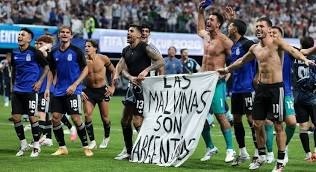
PARAGRAPH TWO: Meanwhile, on the pitch, the Argentine players caused further controversy by parading a banner that proclaimed the Falkland Islands as theirs. The banner was unfurled in full view of the cameras and the crowd, reigniting tensions between the two countries. This act was seen by many as a blatant politicization of the game, and it sparked a heated debate about FIFA’s rules on mixing politics with sport. Critics argued that such displays violate the spirit of international competition, while supporters claimed it was a legitimate expression of national pride and historical claims.
Give me your comments:
Discuss:
PARAGRAPH THREE: *This incident has caused a major controversy regarding FIFA’s stance on political demonstrations.* FIFA has long maintained that sport should remain separate from politics, but the Falkland Islands banner challenged this principle directly. Many in the British public and government viewed the act as an unacceptable provocation, especially during an event that is meant to promote unity and fair play. The British government issued a strong statement condemning the display, emphasizing that sport should not be used to make political statements, especially on such sensitive issues.
Give me your comments:
Discuss:
PARAGRAPH FOUR: The fallout from the match is likely to be significant. Many British citizens and politicians are calling for stricter measures against politicized displays in future tournaments. There is also concern that the incident could strain diplomatic relations between the UK and Argentina, especially given the ongoing political tensions surrounding the Falkland Islands. The government has reaffirmed its support for the Islanders and has warned FIFA to take a firmer stance on such provocation. The match’s outcome and the events on the pitch have thus become more than just a sporting disappointment—they have ignited a broader debate about the intersection of sport, politics, and national identity.
Give me your comments:
Discuss:
The Rules:
FIFA’s rules prohibit players and officials from making political, religious, or personal statements through banners, armbands, gestures, or other forms of expression during a match. Specifically, Article 4 of the FIFA Disciplinary Code states that players and officials must not display political, religious, or personal messages on clothing, accessories, or banners that could be deemed provocative or inappropriate.
FIFA emphasizes that football should be a platform for promoting unity, fair play, and respect among nations and fans. Therefore, any form of politicization—such as displaying banners with political slogans or symbols—can lead to disciplinary actions, including warnings, fines, or sanctions against the team or individuals involved. The governing body maintains a strict stance against politicizing the game to preserve its integrity and neutrality.
Punishments:
If a player or team displays a political banner or makes a politicized statement during a FIFA-sanctioned match, FIFA can impose various disciplinary measures. The possible punishments include:
Fines: The team or individuals involved may be fined a specified amount for breaching FIFA’s rules on political neutrality and conduct.
Warnings or Reprimands: Players, officials, or teams could receive official warnings or reprimands for violating regulations.
Disqualification or Match Forfeiture: In severe cases, FIFA could decide to disqualify the team from the tournament or award a victory to the opposing team if the display is deemed to have disrupted the integrity of the competition.
Points Deduction: For ongoing tournaments or qualifiers, teams could face deduction of points as a penalty.
Banning or Suspension: In extreme cases, players or officials involved in politicized actions could face temporary or permanent bans from participating in FIFA competitions.
FIFA emphasizes that such punishments are meant to uphold the principles of sportsmanship, neutrality, and respect, ensuring the focus remains on fair competition rather than political statements.
INTERMEDIATE TEXT
INTRODUCTION: In the recent game between England and Argentina in the FIFA World Cup, the English coach made a controversial decision. After England scored an early goal, instead of trying to win the game, the coach chose a defensive way to play. This change to a safer style was seen as a mistake. It gave Argentina more control of the ball and allowed them to attack many times. Many experts think that this cautious plan made it harder for England to win and showed that the team was unsure at a very important moment.
My comments:
Discuss:
PARAGRAPH ONE: The British fans reacted quickly and were very upset. They shared their feelings on social media, calling the decision “terrible” and “disappointing.” Many supporters thought that the coach’s hesitation made the team miss a chance to go further in the tournament. People called into radio shows and talked on TV, showing their anger and shock. They said England played too safe and lost their fighting spirit after scoring the first goal. Most people believed that being more aggressive could have changed the game’s result.
My comments:
Discuss:
PARAGRAPH TWO: At the same time, during the game, some Argentine players caused more trouble by showing a banner that said the Falkland Islands belong to them. They held up the banner where everyone could see it, including the cameras and the fans. This made tensions between the two countries worse. Many people saw this as a political act, using the game to send a message. This started a big debate about whether sports should include politics. Some said such displays break the rules of fair play, while others said it was a way for Argentina to show pride in their history.
My comments:
Discuss:
PARAGRAPH THREE: This event caused a big argument about FIFA’s rules on political protests. FIFA has always said that sports should stay separate from politics. But the Falkland Islands banner challenged this idea. Many people in Britain saw the act as a serious provocation, especially because the game is supposed to bring people together and promote fair play. The British government made a strong statement condemning the display. They said sports should not be used for political messages, especially on such sensitive issues.
My comments:
Discuss:
PARAGRAPH FOUR: The effects of this game and the event on the pitch will be felt for a long time. Many people in Britain, including politicians, want stricter rules against political protests in future tournaments. There is also worry that this incident could cause problems between the UK and Argentina, because of the ongoing tensions about the Falkland Islands. The British government showed its support for the people of the Falkland Islands and told FIFA to take stronger action against such actions. The result of the game and what happened during the match are now about more than just sports — they have started a big discussion about sports, politics, and national pride.
My comments:
Discuss:
UPPER BEGINNER TEXT
INTRODUCTION: In the recent game between England and Argentina in the FIFA World Cup, the English coach made a controversial decision. After England scored an early goal, instead of trying to win the game, the coach played more safely and made the team more defensive. Many people thought this was a mistake. It gave Argentina more control of the ball and many chances to attack. Experts believe that playing so carefully made it harder for England to win. It also showed that the team was unsure at a very important moment.
My comments:
Discuss:
PARAGRAPH ONE: The British fans reacted quickly and were very upset. They shared their feelings on social media. They called the decision “terrible” and “disappointing.” Many supporters thought the coach’s hesitation made the team miss a chance to go further in the tournament. People called into radio shows and talked on TV. They were angry and surprised. They said England played too safe and lost their fighting spirit after scoring the first goal. Most believed that if England had played more strongly, they might have won the game.
My comments:
Discuss:
PARAGRAPH TWO: At the same time, during the game, some Argentine players caused more problems. They showed a banner that said the Falkland Islands belong to Argentina. They held up the banner where everyone could see it, including the cameras and fans. This made tensions between the two countries worse. Many people saw this as a political message, not just a sports act. It started a big discussion about whether sports should include politics. Some said this breaks the rules of fair play, but others said it was a way for Argentina to show pride in their history.
My comments:
Discuss:
PARAGRAPH THREE: This event caused a big argument about FIFA’s rules on political protests. FIFA says that sports should stay separate from politics. But the banner about the Falkland Islands challenged this rule. Many people in Britain saw the act as a serious insult, especially because the game is meant to bring people together and promote fairness. The British government strongly disagreed and said the display was wrong. They said sports should not be used to make political messages, especially on sensitive issues.
My comments:
Discuss:
PARAGRAPH FOUR: The effects of this game and what happened during the match will last a long time. Many people in Britain, including politicians, want stricter rules against political protests in future tournaments. There is also worry that this incident could cause problems between the UK and Argentina because of the ongoing issues about the Falkland Islands. The British government supports the people of the Falkland Islands and told FIFA to take stronger action against these protests. The result of the game and what happened on the field are now about more than just sports. They have started a big discussion about sports, politics, and national pride.
My comments:
Discuss: