
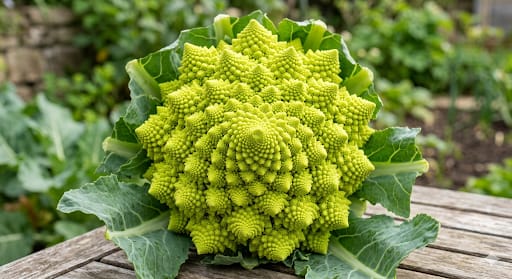
The vocabulary of “The Fibonacci Sequence” in nature.
PARAGRAPH ONE: The Fibonacci Sequence in Nature: An Intriguing Pattern
The Fibonacci sequence, a series of numbers where each number is the sum of the two preceding ones (0, 1, 1, 2, 3, 5, 8, 13,), is a mathematical marvel that manifests itself in numerous natural phenomena. Its appearance is not merely coincidental but reflects an underlying principle of growth and harmony within the natural world. This sequence often underpins the structural organization of various biological systems, revealing a fascinating intersection between mathematics and nature.
Questions: Now try to use your English to explain to your teacher the following.
1. What is the Fibonacci sequence?
2. How are the numbers in the sequence generated?
3. What does the phrase “manifests itself” imply about the sequence?
4. What does the phrase “underlying principle” suggest?
5. Why is the Fibonacci sequence considered a “marvel”?
VIDEO: Watch the short video and then ask your teacher one question.
QUESTIONS:
Student askes his or her own questions.
PARAGRAPH TWO: Fibonacci in Flora: The Geometry of Plants
In the plant kingdom, the Fibonacci sequence is vividly exemplified by the arrangement of leaves, flowers, and seeds. For instance, the spiral patterns on sunflower heads and the seed heads of pinecones follow Fibonacci numbers, optimizing space and maximizing sunlight exposure. This arrangement, known as phyllotaxis, exemplifies how nature employs mathematical principles to enhance efficiency and survival. Such patterns are not only aesthetically pleasing but also serve functional purposes that benefit the plant.
Questions: Now try to use your English to explain to your teacher the following.
1. Where can Fibonacci numbers be observed in plants?
2. What is the significance of spiral patterns on sunflower heads?
3. What is “phyllotaxis”?
4. How do Fibonacci patterns benefit plants?
5. Why are these patterns considered both functional and aesthetic?
ADVANCED AI Generated Question (Click the link to hear the question)
https://g.co/gemini/share/83777e4e3647
PARAGRAPH THREE: Fibonacci in Animal Life: Structural Elegance
Animals also exhibit Fibonacci-based proportions, notably in the shells of mollusks and the arrangement of scales on various creatures. The nautilus shell, for example, grows proportionally in a logarithmic spiral that approximates Fibonacci ratios. These patterns are not arbitrary; they often contribute to the animal’s structural integrity and adaptability. The Fibonacci sequence thus exemplifies a natural blueprint that influences the form and function of living organisms.
Questions: Now try to use your English to explain to your teacher the following.
1. Which animals display Fibonacci proportions?
2. How does the nautilus shell relate to Fibonacci numbers?
3. What role do Fibonacci patterns play in animals?
4. What does “logarithmic spiral” mean in this context?
5. Why is the Fibonacci sequence described as a “natural blueprint”?
PARAGRAPH FOUR: The Broader Significance: Mathematics as a Universal Language
The pervasive presence of Fibonacci patterns across diverse ecosystems suggests an intrinsic link between mathematics and the natural order. Recognizing these patterns enhances our understanding of biological processes and underscores the universality of mathematical principles. Moreover, it highlights the idea that nature, in its complexity, often adheres to elegant and simple formulas that govern growth and form. This revelation continues to inspire scientists and mathematicians alike, illustrating the profound interconnectedness of all living things.
Questions: Now try to use your English to explain to your teacher the following.
1. What does the presence of Fibonacci patterns across ecosystems imply?
2. How does recognizing these patterns deepen our understanding?
3. What does the phrase “universality of mathematical principles” suggest?
4. Why does the author describe these formulas as “elegant and simple”?
5. How does this knowledge influence scientific research?
______________________________________________________________________________
Answers to the Questions:
*Paragraph 1:*
1. It is a series of numbers where each is the sum of the two previous ones.
2. By adding the two preceding numbers in the sequence.
3. That it appears naturally in the world around us.
4. That there is a fundamental principle or rule underlying the pattern.
5. Because it appears in various phenomena and reveals natural harmony.
*Paragraph 2:*
1. In the arrangement of leaves, flowers, and seeds.
2. It helps optimize space and sunlight exposure.
3. The arrangement of leaves or seeds on plants.
4. They help plants grow efficiently and survive better.
5. They are both visually attractive and functionally beneficial.
*Paragraph 3:*
1. In shells and scales of animals.
2. It grows in a spiral that approximates Fibonacci ratios.
3. They contribute to structural stability and adaptability.
4. A spiral whose size increases proportionally to Fibonacci ratios.
5. Because they reveal a natural structural plan.
*Paragraph 4:*
1. In various animals like mollusks and fish.
2. It follows a spiral pattern based on Fibonacci ratios.
3. They influence the shape and growth of organisms.
4. A spiral that expands logarithmically, following Fibonacci ratios.
5. Because it reveals a fundamental pattern governing growth and form.
*Paragraph 5:*
1. That Fibonacci patterns are a fundamental aspect of nature’s design.
2. It helps us understand biological growth and organization.
3. That mathematical laws are universally applicable in nature.
4. Because they are simple yet powerful representations of natural laws.
5. It encourages further scientific exploration into nature’s mathematical foundations.
—
Would you like me to format this as a printable worksheet or add more activities?